Hey Ya'll!!! Whew!! Ya'll hit us with your favorite holiday recipes and they are all FANTASTIC!! Thanks to all of you who entered! So here's the thing, Michelle and I get pretty busy around the holidays. So busy that we were way behind in any holiday baking and cooking... We usually have a fun little party on Christmas Eve, and this year was no different, only our Christmas Eve Party was spent trying out YOUR recipes!! Boy we had fun and I'd like to share our attempts with you! Now, granted... you guys shared your favorites, your BEST, and I can tell we've got some practice to do to make ours as pretty and perfect as yours!!
First up!!
1. Heather's Honey Caramels...
Now, let me start out by saying that candy making takes a special touch....and good dry weather sure helps. Candy has a hard time setting up when it's rainy and moist. This year just so happened to be one of the rainiest and warmest ever. Soo, our honey caramels didn't turn out as planned. However, when God gives you runny carmel...ADD IT TO THE BOTTOM OF A CHOCOLATE PIE!! At least that's what we did! Thanks so much Heather!! I used our raw milk cream and honey and felt incredibly healthy making this delectable candy treat!!!
 |
| Can you see that yummy dripping caramel on the bottom there?? I added walnuts too! |
Now, I didn't get pictures of the process for this one...to busy actually making it! ha!! But I do have a picture of our final result!! Soooo good!!
1 cup Honey
3/4 cup Heavy Cream
1 1/2 teaspoons Pure Vanilla Extract
2 Tablespoons Butter
Sea salt for sprinkling on top.
Combine honey and cream in a sauce pan and bring to a boil on high heat. Stir occasionally while it cooks. Continue cooking until the mixture reaches soft ball stage. I like to use a candy thermometer.Remove pan from the heat and immediately stir in vanilla and butter. Stir until butter is completely melted and combined. Pour into a generously buttered 8 X 8 inch dish sprinkle with sea salt and let cool. Then cut into 1 inch squares and wrap in small pieces of wax paper. Store in an airtight container.
2. Jan's Famous Monkey Bread
 |
| biscuits (it took 2 cans and I'm thinking to make my own next time... sugar/cinnamon/bunt pan |

 |
| sugar/cinnamon/butter simple syrup |
Ours is simple old monkey bread. Biscuits quartered and rolled in cinnamon and sugar. Syrup made with stick of butter cup of sugar and two tablespoons of cinnamon all brought to a boil. Pour syrup over biscuits in a bunt pan. Bake 350 for 50 minutes
I wish I had a picture of Jan's monkey bread she dropped off.. but it didn't stick around long enough!!!!
3. Jason's Awesome Rolls
 |
| Finished Product!!!! |
 |
| Letting dough rise in a warm place |
 |
| getting ready to punch down dough |
 |
| here we go... my favorite part! |
 |
| woosh!! |
or rolls / buns / or whatever you want to make with it
1 tablespoon active-dry yeast
1/2 cup (4 oz) warm water
1/2 cup (4 oz) milk (whole, 2%, or skim)
1 large egg
2 tablespoons vegetable oil
2 tablespoons sugar
1 teaspoon salt
3 cups (15 oz) all-purpose flour
use to brush on top before cooking
1 tablespoon butter
1. Combine the ingredients for the dough: In the bowl of a standing mixer (or a large bowl, if mixing by hand), stir the yeast into the warm water and let it sit until dissolved. In a separate bowl, whisk together the milk, egg, oil, sugar, and salt. Add this to the yeast mixture and stir until combined. Add all the flour and stir until it forms a shaggy dough.
2. Knead the dough: Knead at low speed, or by hand against the counter, for 8-10 minutes, until smooth but slightly tacky. It should spring back when poked.
3. Let the dough rise: Cover the mixing bowl and let the dough rise in a warm spot until doubled in bulk, about an hour.
4. Shape the rolls: Dust your work surface with a little flour and turn the risen dough out on top. Divide the dough into 12 pieces with a bench scraper. To shape into rolls, tuck the edges underneath to form a plump little package, then roll the dough against the counter or between your palms until round.
5. Heat the oven and let the rolls rise: Line a 9x13 pan with parchment and spray with nonstick coating. Arrange the rolls inside the pan spaced a little apart. Let the rolls rise until they look pillowy and fill the pan roughly 30-40 minutes.
While the rolls are rising, pre-heat the oven to 375°F.
6. Brush the rolls with butter. Melt the butter and brush it over the risen dinner rolls. This helps the tops to brown and keeps the crust soft.
7. Bake the rolls: Bake the rolls until golden, 15-18 minutes.
Lift the rolls from the pan using the parchment and let the rolls cool on a wire rack until cool enough to handle. They are best if eaten within a day or two, but will keep in an airtight container on the counter for up to a week. Rolls can also be frozen for up to 3 months and reheated in a warm oven.
 |
| rising rolls... not perfect, but hey! |
4 Matt Irvine Family's Old Fashioned Potato Candy
Okay, so I have to say, this one was the most intriguing to try. I had never heard of this candy. Why have I never heard of this candy!! This was fun and easy to make and makes a beautiful presentation!

http://www.southernplate.com/2010/12/old-fashioned-potato-candy.html
 |
| simmering our potato to add to the powered sugar |
 |
| rolling out dough |

 |
| rolled and ready for the fridge! |
 |
| Not bad for the first time!! Thanks Matt for introducing us to this new favorite!!!! Matt said the taste was close to Divinity... I'm not sure how to describe it. Kind of like a Buckeye without the chocolate... but it's so good!!!
5. Harold's Creamed Cauliflower"Actually my favorite thing at this meal is creamed cauliflower. Very simple make a medium white cream sauce and add steamed cauliflower"
Now, this turned out to be very addicting in a good way!! Harold said he grew up with his Irish grandmother always making something out of cauliflower and I was really surprised at just how good this turned out to be!!!!  |
Steamed Cauliflower
 |
| salt, pepper, butter, flour for white sauce |
 |
| mixing butter and flour |
Also known as Béchamel sauce, it is versatile and has many uses. Pair it with vegetables, turn it into a creamy casserole or ladle it over seafood or sliced chicken. Serve "as is," make it into a cheese sauce or spice it up with mustard, dill or curry.
Ingredients

I loved this recipe!!! I didn't have any Jiffy mix, so I found a recipe for homemade Jiffy mix
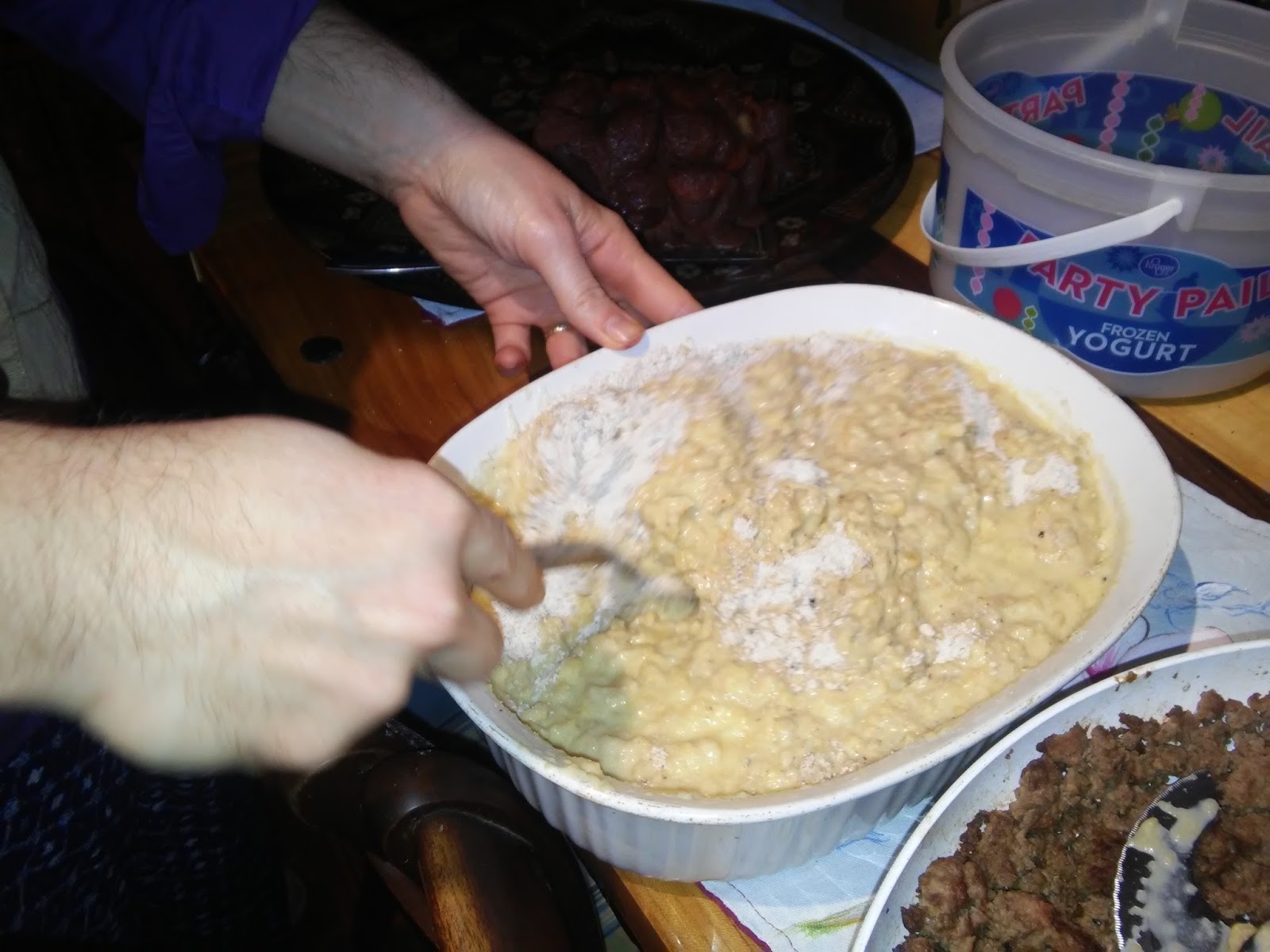 
This was another new recipe for us!!! I've tried some like this but this one turned out FANTASTIC!! Of course we didn't have any creamed corn on hand, but no worries... I opened up a quart jar of home canned corn and took half and put it in the food processor with some cream and sugar... I don't know what made this dish so special but it was amazing!! Thanks Shannon!
In fact... THANK YOU ALL for participating in our fun little giveaway! We hope to have more in the future. Your recipes made our day and everyone loved them all! God Bless and I pray everyone has a healthy and Happy New Year! I also hope you love these recipes as much as we did!!!  |




 Fly Predators are tiny, completely biteless and stingless. They never become a pest themselves. Because of their small size and the fact they live their entire life cycle on or near manure (where the pest fly pupa are typically found), Fly Predators go virtually unnoticed.